News
Training artists to intervene in public schools
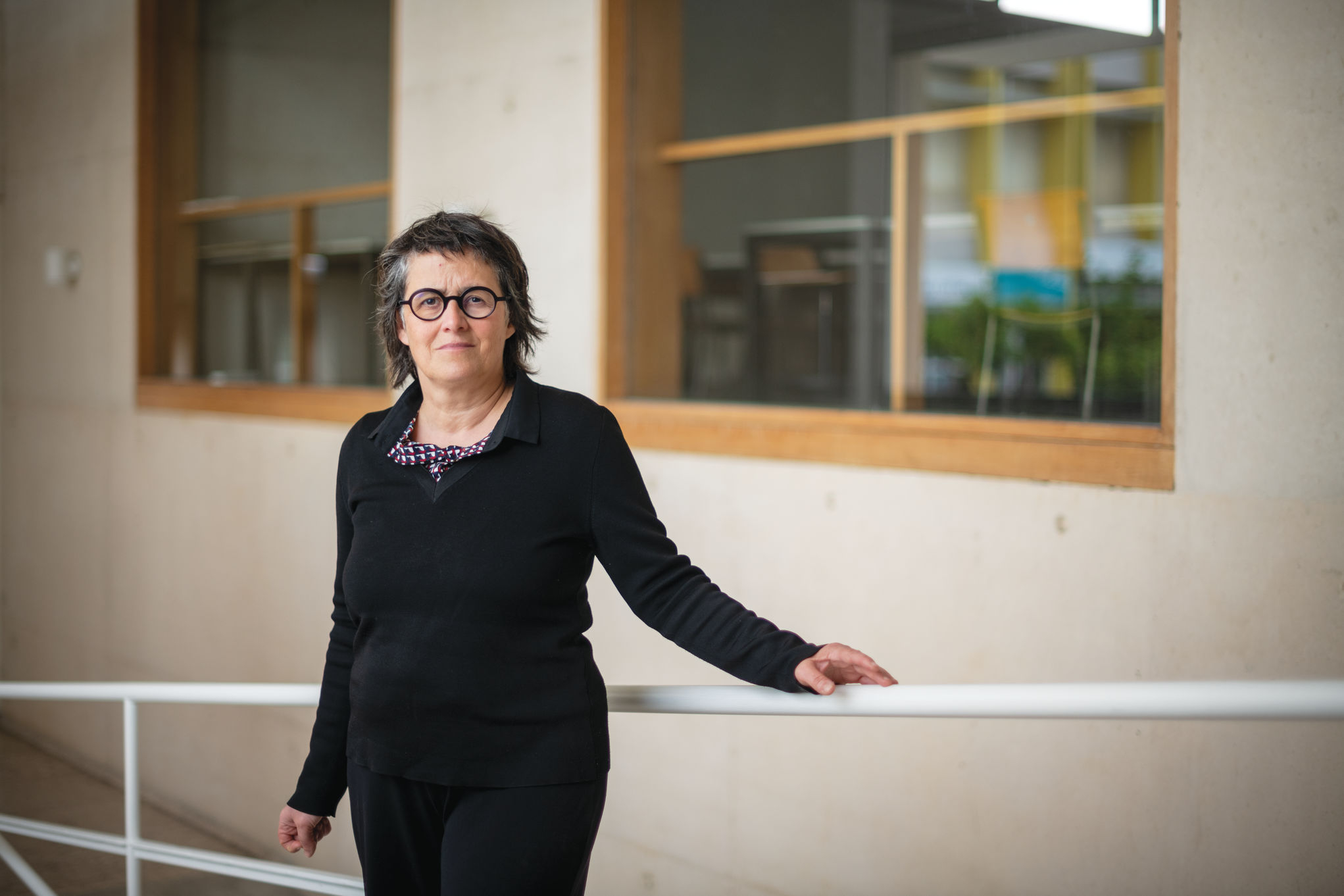
Professor Iscte Sociology and Public Policy
Researcher CIES-Iscte
With the support of the Creative Europe Programme, CIES-Iscte is part of the team of a project led by the Cultural Association Sete Anos to create and validate a model of artistic practices as pedagogical practices in public schools, through which it is intended to train artists to intervene in schools
What is the focus of the ARECA project?
The project "Artistic Education and Training: methodologies, Instruments Used by Artists to Work in Schools" focuses on teaching artists to work in public schools. It is an interdisciplinary collaborative project on the relationship between contemporary artistic and learning practices. It is led by Cláudia Dias, a dance person and a performer who created the Sete Anos Association and collaborated with artists from various areas, such as music and theatre. But this project has a past...
What is the context?
The Seven Years Seven Schools project originated in Almada in 2016, with the City Council's and other entities' support. It also had the support of the Calouste Gulbenkian Foundation, within the framework of the PARTIS – Artistic Practices for Social Inclusion programme and the la Caixa Foundation. At that time, I and other social scientists were invited to follow Cláudia Dias' project for three years. Then, the Seven Years Association was created, and the Seven Years Seven Schools project is currently being conducted in Seixal, within the scope of Communities in Action – Metropolitan Integrated Operations, supported by the PRR – Recovery and Resilience Plan and the European Next Generation EU Funds.
ARECA collaborates with artists, but is it also an international project?
ARECA responds to the objective of training artists to work in schools and is concerned with having an international dimension to reach more people, not only being developed in the context of Portuguese.
So, there are two international partners. In Spain, Azala is a project that combines a cultural project and a rural accommodation project. In the Basque Country Rouge Elea, in Nouvelle-Aquitaine, is a company that crosses circus, dance and music.
When the application to the Creative Europe programme was prepared, which also aims to fund cooperation projects, Cláudia invited me to, once again, accompany the project so that it would be possible to produce work of a scientific nature, important for the artists and people who carry out these projects.
Is the university's role in this partnership to validate and approve the rigour of the work developed?
The work of the CIES team in the project – me, Joana Marques, and Carlota Quintão – is one of accompaniment, doing, for example, interviews with people working in schools, artists, and teachers. We also develop other activities, such as workshops with young people. We conduct this activity in close collaboration with Sete Anos. As the leading country is Portugal, we will then coordinate the work of researchers in Spain and France.
As is normal in a scientific research project, we are going to do a 'state of the art' on artistic and cultural education and activate various methodological procedures, such as, for example, focus groups with teachers and students, to reach scientific results on the problem – on artistic and cultural creation and its relationship with education and, in this sense, on the role of artists in this field. As it involves cooperation, we also have the role of accompanying the project, as we did in PARTIS: attending sessions promoted by the artists in schools, promoting joint reflections, etc.
ARECA is an interdisciplinary collaborative project on the relationship between contemporary artistic and learning practices
In which school is this initiative being developed?
We work at Basic Schools 2 and 3 of Corroios of the João de Barros Group. These are schools with socially vulnerable audiences in different configurations.
The work at the Seixal school takes place between January and May. During this period, we conduct status reports, meetings, focus groups, interviews with artists, workshops with students and teachers, to produce knowledge and give feedback to the team, which considers this external look especially important. In the end, a handbook is planned that condenses practices and methodologies of artistic intervention in schools.
It is settled that the project only collaborates with public schools, assuming an attitude of valuing the fundamental role of public schools, not only to contribute to the education of young people but also to foster a spirit of citizenship.
Will the project only pass through Seixal?
No. The method will be applied to the Spanish and French realities starting in September this year. The project's application includes nine artists, twenty-four teachers and 150 students, but there are other beneficiaries, such as the local government. Underlying this is the idea of democratising access to artistic creation.
Not being a "pure" research project, as I said, it has very concrete purposes.
The goal is to formalise a pedagogical method that Cláudia Dias has worked on since 2016. It is expected to produce a result that can be used by other people and by other artists from a participatory process of reflection and experimentation, in which learning can be systematised, and the project can be developed in other contexts.
Cláudia Dias mobilises a specific work methodology entitled "Real-Time Composition Technique". It is adopted in the work with young people, having, in this case, as a starting point a work by Cláudia, but they are the ones who create the pieces. Therefore, she will not teach them. Every week, there is a period defined by the schools, and during several sessions, they work on different themes and approaches. Then, Cláudia summons the artists she has invited according to their specificities, such as a musician, a kickboxer, and a Muay Thai coach.
Are these the nine artists that the project refers to as direct beneficiaries?
Yes. One relevant aspect is the possibility that the artist's work can articulate and integrate formal learning content.
She works immensely on Portuguese; she is demanding from the point of view of language, precision, the issues of history, the formation of citizenship, and being a politically active person, and this allows her to summon the knowledge of young people with practices that take place in formal learning throughout the school year. As I mentioned, this work evolves because they are together every week and culminate with public presentations of the student's creative work. However, it should be noted that it will not teach anything: they will tell you what they want to do and work together.
Another thing that I like deeply, even as a teacher, is that the process is often more important than the result. The result is young people and their circumstances. This vision is: what can we give these young people? What do we learn from them? The result depends on what they want to do.
The project also has a final spectacle because public recognition is important to humans. Young people attach a lot of importance to this because it allows family members to see their work (even though they are incapable of doing it).
ARECA is a collaborative project based on the "Real-Time Composition Technique" methodology. It is expected to produce a result that can be used by other people, by other artists, from a participatory process of reflection and experimentation
Will the manual from this project expose this methodology based on 'Real-Time Composition'?
It will be a tool manual for artists working in a school context, but it can also be used by other professionals, such as teachers. We do not know the final format yet, but it will certainly be made available to everyone and in several languages. We will collaborate on the handbook and publish scientific articles.
For academic research and CIES-Iscte, what is most enriching about participating in a project like this?
For an institution like ours, it is particularly important to find artists like Cláudia Dias who consider the work of researchers relevant to their practice. The work we do with the project is scientifically rigorous and follows the procedures of any other investigation. It has a theoretical basis, methodology, tools, conclusions, analytical work, and everything else. Intersecting artistic work with work in schools and research has the crucial role of grounding and producing knowledge for these practices. It also supports the artists.
Another important aspect for CIES and Iscte is the set of scientific results produced. As the focus is on public schools – and Iscte has a truly relevant area in public policies – this is also an opportunity to discuss educational policies and policies in arts and culture.
Artists who work in public schools and the arts can have influence in working with more socially vulnerable populations. But it also allows us to understand the importance of artistic work in the lives of all of us as citizens. I have been collaborating with artists for a few years now, and these projects still have an important particularity: trying to overcome the precariousness of artists through project funding.
Finally, it is also especially important for Iscte to understand that artistic creation is a form of knowledge production that is as valid as scientific work but is done in other ways.
Is there this sensitivity on the part of the academy?
No, I do not think there is. But these projects also serve to change that. We produce scientific knowledge; we have the indicators that the academy values, but we also recognise what we have learned from the artists. It is action research.