News
Portugal among the 25 best democracies in the World
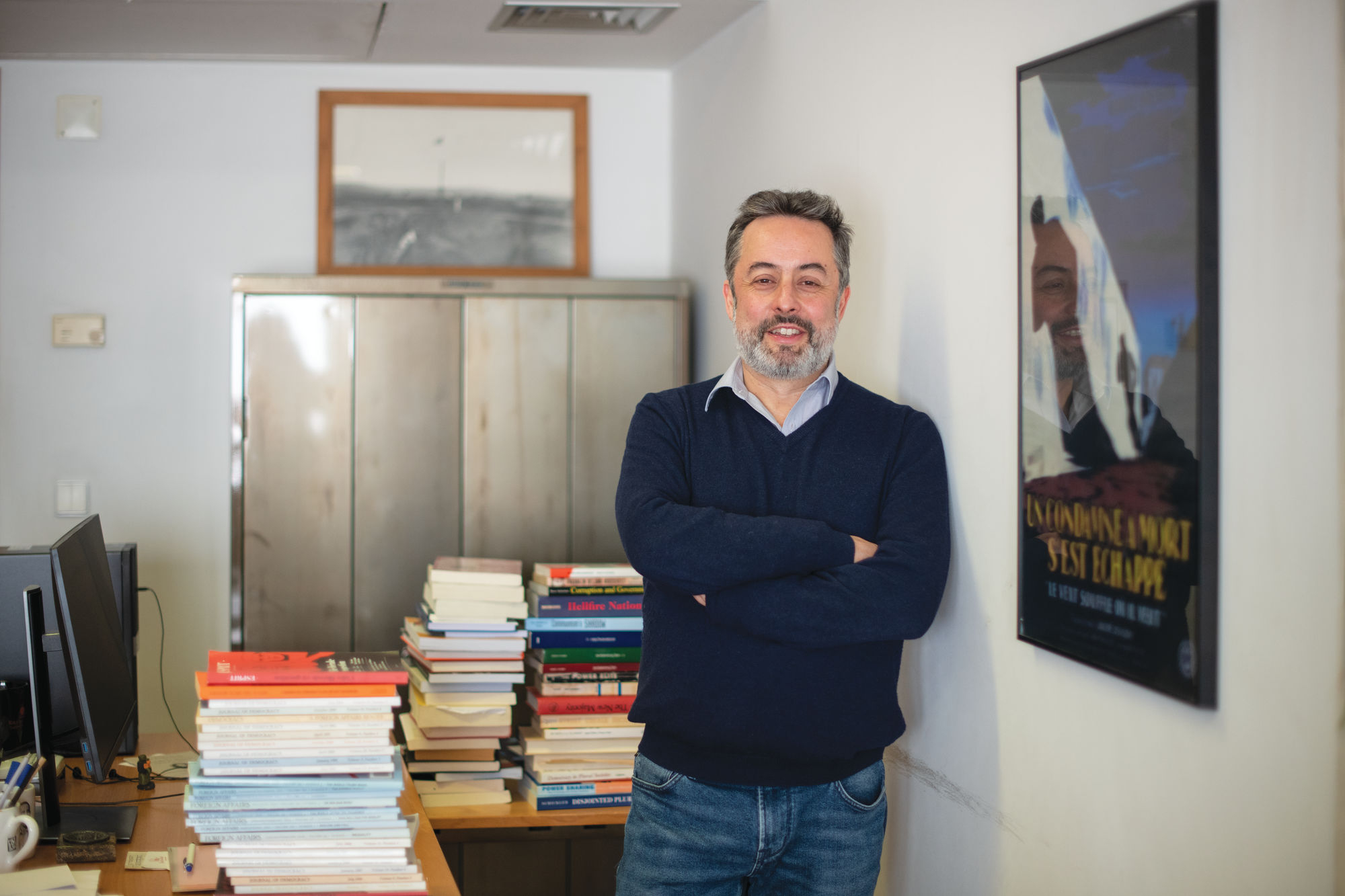
Professor Sociology and Public Policy at Iscte
Researcher CEI-Iscte
The Democracy Report, produced by the V-Dem Institute at the University of Gothenburg, combines analyses of political institutions by a large group of experts using rigorous criteria. The 2023 edition reveals that Portugal has been losing positions in the Liberal Democracy Index, primarily due to the inadequate functioning of the justice system and the media
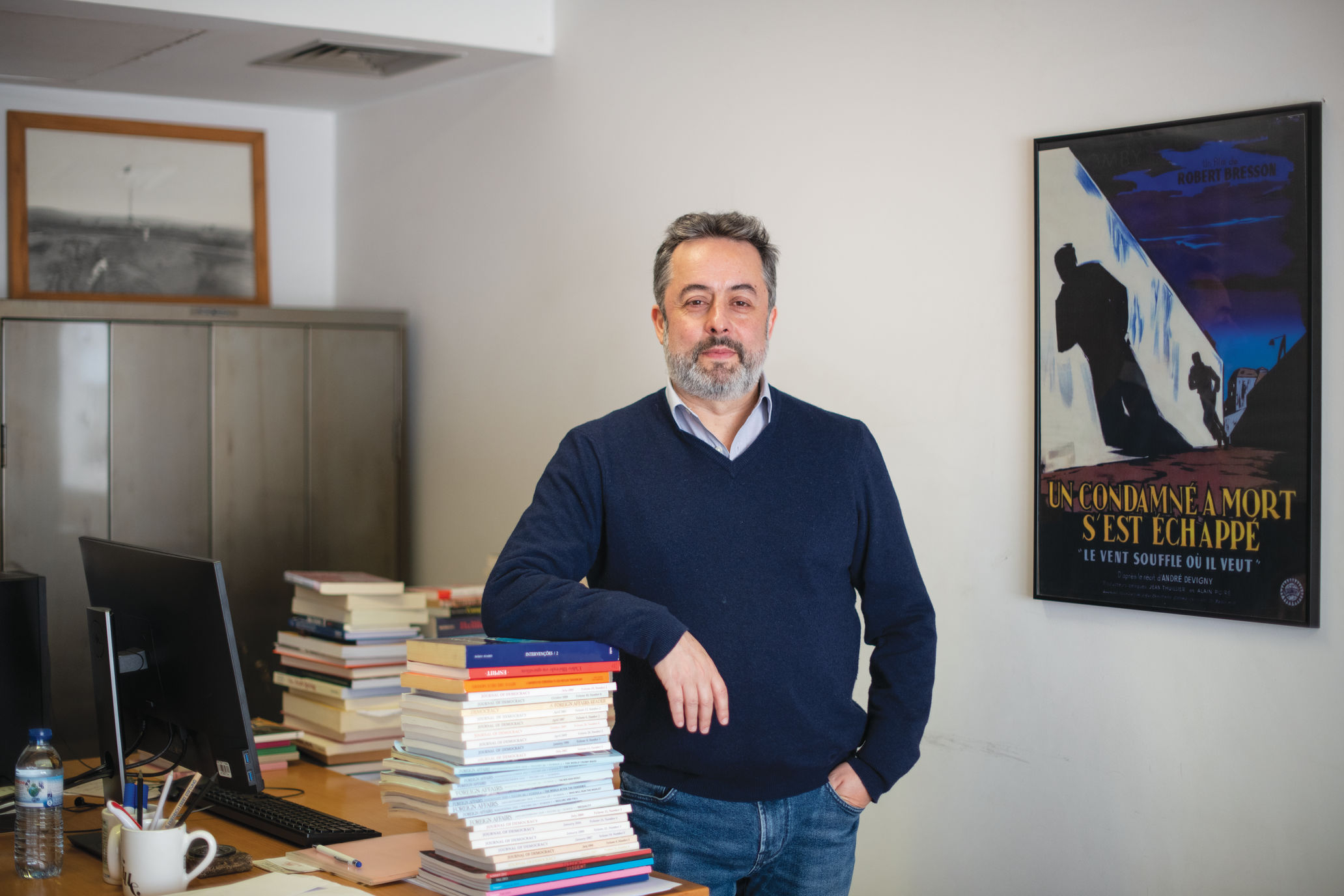
Does Portugal fare well in the global portrait of democracies?
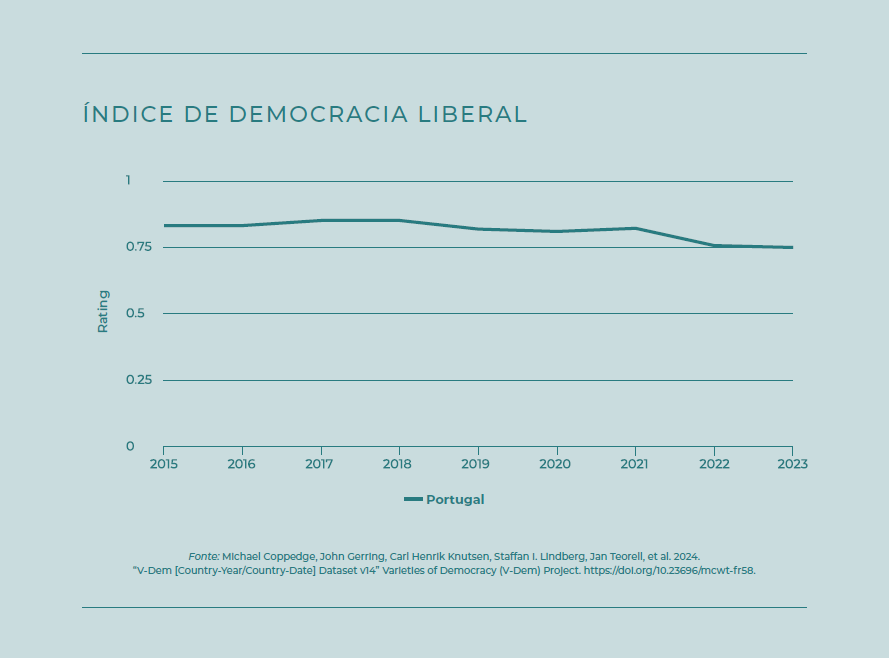
According to the annual reports published by the V-Dem Institute (Varieties of Democracy), Portugal is among the world's best democracies, particularly in dimensions associated with liberal democracy, including the quality of elections and the electoral process.
Portugal has never had cases of electoral corruption. Regarding the autonomy of parliaments and levels of the rule of law, Portugal has no significant problems.
In the latest V-Dem report, Portugal dropped a few places in 2023. Why did this happen?
There is slight erosion, but Portugal remains among the top 25 democracies in the world, alongside nearly 180 countries. If Portugal has fallen slightly, which has been the case since 2018, it is also due to other countries having risen in the report. However, there are areas where erosion has exceeded the margin of error.
What areas are they?
One of the areas is media quality and information pluralism. There is a lot of opinion and little information. According to the report, information pluralism has declined, and there is also some permeability in the media's independence, likely due to political influences. There is a lot of political 'commentary' and a lot of partisanship. Financial problems may be associated with media groups, which will have some impact.
The second aspect concerns the decline in access to justice and its quality. This is reflected in the equality of citizens, who have their rights fulfilled. There has also been some erosion in this respect. There is also some tension between the political and judicial systems.
Does this conflict between the political and judicial systems contribute to their lower prestige in the eyes of the population?
Yes, both. Portugal has long faced these issues, but they have worsened in recent years. A third aspect, which the absolute majority has exacerbated, is the government's reduced ability to control parliament. There was some tension between the executive and parliament, which was a factor in the functioning of the committees of inquiry, as the report indicated that they did not conduct much oversight work.
Specific government legislative processes, led by the Constitutional Court and clashing with some civil liberties, also caused tension. This was the case with metadata, the law of secrets, and the law on medically assisted death. The government made several proposals regarding these laws, which were consistently rejected, creating tension.
A fourth aspect has also contributed to less government autonomy. From a certain point on, the Prime Minister's ability to appoint or dismiss ministers became somewhat restricted because of tension with the President of the Republic. This has also hampered the government's ability to act. These are the leading causes of democratic erosion; however, it cannot be said that Portugal is in a state of crisis.
Contrary to what is said in the media, the V-Dem report states that Portugal does not have widespread corruption. For decades, the levels of corruption in Portuguese democracy have been decreasing, largely due to increased control and vigilance
The V-Dem report denounces that 42 countries worldwide are experiencing episodes of autocratisation, and 28 of these were still recent democracies. What is this phenomenon?
We have identified two types of autocratisation. Some regimes are not democratic and have become even more democratic and authoritarian, such as China, which, in the last decade, has been an even more centralised and personalised regime in the figure of the leader, Xi Jinping, or Russia, with rigged and manipulated elections, but which was a hybrid regime and gradually became a closed autocracy. Other cases are those in Venezuela, Cuba, and North Korea.
An interesting phenomenon certainly calls into question the theories developed after the Portuguese revolution of 1974/1975, which gave rise to the so-called third wave of democratisation, in which democracy expanded as never before. In the third wave of democratisation, as well as in older democracies, a process of democratic erosion is underway, in which civil liberties are being called into question while the capacity for electoral manipulation increases. There is also the restriction of rights based on religious or ethnic identity.
We are witnessing a significant decline in democratic governance in countries such as the US, India, Europe, Greece, and Italy. Poland, like Brazil, managed to reverse this situation. Therefore, we have democracies under attack, and some, such as Hungary, have ceased to be democracies.
The V-Dem report also warns that the rise of populism is a global phenomenon, but in what way?
The report emphasises that, with the rise of populism on a global scale---many authoritarian and ethno-nationalist parties, such as Modi's in India---the erosion is less visible if measured by country. Still, counting by population is much greater because these are mainly large countries with autocratic tendencies.
China, Russia, Iran, and Venezuela have never been democratic regimes, but these regimes are also in severe crisis.
The United States, Brazil, Indonesia, and South Africa have large populations. Therefore, the percentage of the global population living in autocracies is approximately 70%. However, this trend needs to be more visible in each country.
Liberal Democracy Index – How is it formed?
The methodology of the V-Dem Institute reports uses objective data. For example, to what extent do parliaments have the capacity to hold the government accountable? What is the investigative capacity of parliamentary committees? There are almost 70 variables! Another part of this index is the evaluations of numerous experts and individuals with relevant qualifications. Based on the assessments of the academics who answer a questionnaire on the indicators of democracy, a weighted average is calculated.
Only one or two experts conduct most democracy assessment surveys on a global scale. Still, in V-Dem, there are many questions, a great diversity of expert opinions on the subject, and a notable gender balance between those who live in the country and those who live outside.
The Economist or Freedom House indexes have few experts answering many questions about many countries. In this V-Dem project, academics define the conceptualisation, evaluation, and understanding of data. Thus, everything is done according to academic rigour. The indices are continually revised, introducing new criteria, which makes this V-Dem ranking the most complete assessment on a global scale, with more than 300 indicators.
I should note that Portugal is a particularly critical country, which can translate into a particularly negative assessment of public opinion and experts on the current political situation.
How do you identify these autocratic tendencies?
Presidential regimes are more likely to have democratic crises in the current context. The United States, Brazil, and India are presidential systems and federal countries. Therefore, presidentialism allows for a concentration of power in a single individual and legitimises this concentration. Someone with a charismatic personality enhances this concentration. On the other hand, in parliamentary systems, more negotiation is required.
Secondly, in presidential systems, the legislative body has less capacity to control the government due to the existence of two separate branches of government. The government is appointed and needs the legitimacy of parliament. This is not the case in presidential systems, where the president is directly elected, and the relationship with the Congress or national parliament is characterised by double legitimacy. The president can hardly be removed or controlled. This is the problem in the United States, and it has paradoxically been solved in Brazil. In Lula's re-candidacy, there was also a united opposition from the left to the right, and this does not happen in the United States with the Republican Party.
Are we witnessing, in Europe, the growth of populist parties as they normalise into democratic systems?
Populist parties also exploit the discrediting of politicians, whether real or imagined. And they assert themselves as representatives of the unpolluted people against the corrupt elites. However, it is an ideological discourse that lacks any adherence to reality. Contrary to what is said in the media, the V-Dem report states that Portugal does not have widespread corruption. It could be better, but it remains among the top thirty democracies in the world. For decades, the levels of corruption in Portuguese democracy have decreased, largely due to increased control and surveillance.
The discrediting of the political class, also a global phenomenon, is exploited by the Chega party. However, there was a confluence here that favoured this: the inflationary crisis, the housing crisis, and the health crisis, which were real but also exaggerated. On the other hand, the relationship between the judicial and political systems is evident in the successive cases launched by the Attorney General's Office. Prosecutors' offices must balance their independence with some responsibility, and sometimes, an imbalance can be exploited negatively.
Democratic parties now face the challenge of finding new forms of collaboration, which were not possible because of divisions between left and right
You recently said in an interview that populism focuses on the figure of a charismatic leader who is the "spokesperson for the people". Can you explain?
Populism seeks a leader who represents the will of most of the people and has a direct, plebiscite-based foundation. That is why it is democratic.
Most populist movements challenge other dimensions of democracy, including certain freedoms and rights of minorities, civil liberties, and the principle of equality before the law.
Another aspect is that the quality of public debate tends to decrease insults, personal attacks, and disinformation -- this has now been seen with Chega being inhibited on Facebook for ten years. Thirdly, once in power, this type of party begins by limiting the capacity of other democratic institutions, such as parliament and independent courts, to influence government. Or the possibility of appointing his political loyalties to higher courts and thus controlling the independent bodies that were supposed to oversee the government. This occurred in Hungary, where Orban exploited the pandemic to establish an open-ended state of emergency.
Democracy can emerge from a revolution.
In addition to being a professor of Political Science and Public Policy at Iscte, Tiago Fernandes is also the director of the Regional Centre for Southern Europe of the V-Dem Institute (Varieties of Democracy) at the University of Gothenburg. The institute publishes an annual report on the state of democracy worldwide.
The report examines the evolution of various dimensions of democratic regimes globally, covering nearly every country. She is part of the team responsible for analysing and coordinating data related to Portugal, Spain, Italy, Greece, and France.
This year, Tiago Fernandes launched two books, supported by the Francisco Manuel dos Santos Foundation (FMMS), related to projects developed at CEI-Iscte.

"Portugal 1974/1975 Revolution, Counterrevolution and Democracy"
"The book compares the Portuguese revolution with others such as the Russian revolution, the Yugoslav revolution, the Spanish Civil War, etc., and the recent revolutions in Eastern Europe. He compares Portugal with the European dynamics of twentieth-century revolutions rather than the 'democratic transitions'. Try to understand why revolutions give rise to democratic regimes. The Portuguese case demonstrates that it is possible to democratise a right-wing dictatorship through revolution. Portugal also has a peaceful revolutionary transition, despite employing disruptive methods such as house occupations and agrarian reform. I believe all this was possible because of the immediate end of the Colonial War," he says.
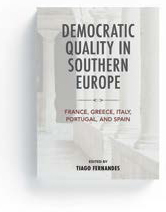
"Democratic Quality In Southern Europe – France, Greece, Italy, Portugal and Spain"
The author stresses that "both the CEI, with the institutional framework and logistical and administrative support, and the financial support of the FFMS were fundamental to making the two books. The data from the V-Dem report on Portugal is also funded by the FFMS", with which it has collaborated since 2015.
About this same phenomenon, in Portugal, in the newspaper Público, he stated that "Portuguese democracy is robust enough for society to resist Chega". What is it based on?
Firstly, the centre parties---PS and PSD---have more than 60% of the vote, which is robust compared to most European democracies. Secondly, while tensions exist between the two parties, there are also signs of potential collaboration in certain areas. The (AD) government has also signalled that it prefers to talk to its left rather than the far-right party, which is a positive sign. Chega's proposals are, many of them, illiberal, part of an anti-democratic programme, and unrealistic in the field of public policy. The phenomenon is closely tied to the context of uncertainty. The context of the inflationary crisis, as well as insecurity in fundamental aspects such as access to healthcare and the housing crisis, has worsened over the last two years. However, the media often exaggerates, which can create panic among the public. According to a survey I conducted, the attitudes towards populism in the Portuguese population reveal that the Portuguese are generally open to immigrants, and anti-immigration prejudices are a minority view. Still, when it comes to access to housing, most of them argue that preference should be given to national citizens rather than foreigners. The issue of housing is now transversal throughout Europe. The Economist magazine recently featured "the world's great housing crisis." The crisis's impacts on housing vary depending on the country.
To counter mobilisation in the face of populism, Portugal has a relatively robust civil society in the trade union movement. Although trade unions are in decline everywhere, in Portugal, they manage to gather about half a million people on the streets
What is the role of civil society, with expression in the streets, in the face of the electoral growth of populism?
This role is little considered, but it is essential to counter-mobilise in the face of populism. Portugal has a relatively robust civil society, particularly in the trade union movement. Although trade unions are in decline everywhere, they gather about half a million members on the streets in Portugal. If we include households, we can discuss more than 1.5 million people.
We know that mobilisation in the streets has been critical in countries that have reversed populist attacks on the system. Surveys show that about 24% of the Portuguese population are union members. Overall, 80% of respondents believe trade unions are essential, as they trust them and, to some extent, the judiciary. These aspects give us reason for optimism.
What happens with parties like Chega is that they usually have an electoral ceiling that, in European democracies, is 20%- 25%. But then they also decline. Even when they reach 30%, as in Italy and Hungary, these parties gain access to power in coalition with the centre or centre-right parties. The issue is less than their electoral weight; they consistently fall between 10% and 20%, but what do the countries within the system do with them? That is where the dangers begin.