

ATENÇÃO: Esta página foi traduzida automaticamente pelo Google Translate. Isto pode ter consequências inesperadas no conteúdo apresentado e, portanto, não nos responsabilizamos pelo resultado dessa tradução automática.
ATTENTION: this page has been automatically translated by Google Translate. This can have unexpected consequences and, therefore, we do not take responsibility for the result of that automatic translation.
Iscte professors interested in organising a Blended Intensive Programme should contact the International Relations Office and submit an application form indicating the title, programme, partner universities, number of participants, number of ECTS, etc.
Detailed information on the BIPs offered by Iscte can be found on the following pages:
OBJECTIVES
The course deals with the important question of how to achieve a just transition to sustainability and manage international projects. It combines theoretical and empirical aspects. The aim is that students apply an interdisciplinary perspective to assessing and understanding global sustainability, as well as managing international projects
SCIENTIFIC AREA
Social Sciences, Economics
RESPONSIBLE
Sérgio Lagoa, Ricardo Barradas
DATES
May 2026
ORGANISING INSTITUTION
Iscte- University of Lisbon
PARTNERS
Austria - UAS BFI Vienna
Croatia - University of Zagreb
Germany - CBS International Business School
Italy - University of Florence
Poland - University of Economics in Katowice
OBJECTIVES
This Blended Intensive Programme (BIP) invites participants to critically and creatively rethink the role of universities shaping the future of society. How can we learn? And how could we teach? By 2050, Education will face unprecedented challenges and transformative opportunities, shaped by rapid social, political, environmental and technological changes. In this context, University Campuses must evolve into responsive, inclusive ecosystems capable of adapting to and adressing the complexities of a rapidly changing world
SCIENTIFIC AREA
Architecture
RESPONSIBLE
Alexandra Paio
DATES
PHYSICAL PART: 5 days - 06/10/25 to 10/10/25
ORGANISING INSTITUTION
Iscte - University of Lisbon
PARTNERS
Cyprus - University of Cyprus
Greece - School of the National Technical University of Athens
Spain - Universitat Politécnica de Valência
OBJECTIVES
This course intends to critically examine and discuss the relationship between migrations and representations of crime, departing from present debates around insecurity and the migrant, placing them in the historical context of the history of globalization. Study the global migrations during the 19th and 20th centuries, focusing specifically in three regions: Eastern/Northern Europe, the Mediterranean, and the Atlantic. Examine the emrgence as a public issue of transnational crime during the second half of the 19th century and its consolidation as an international question in the 20th century
SCIENTIFIC AREA
Sociology, History
RESPONSIBLE
Gonçalo Rocha Tavares, Maria João Vaz
DATES
PHYSYCAL PART: 10 days - 15/09/25 to 24/09/25
ORGANISING INSTITUTION
Iscte - University of Lisbon
PARTNERS
Belgium - University of Ghent
Brazil - PUC - Pontifícia Universidade Católica (Rio de Janeiro)
France - University of Lyon (UDL)
OBJECTIVES
Fostering a comprehensive understanding of transatlantic relations, including its political, economical, social, cultural and historical dimensions. Promoting an interdisciplinary approach that draws on various disciplines such as political science, international relations, history, economics, sociology and cultural studies
SCIENTIFIC AREA
History, Economics, Political Science, International Relations, Sociology
RESPONSIBLE
Luís Nunes Rodrigues, Pedro Seabra
DATES
PHYSYCAL PART: 1st Semester 2025/2026 - dates to be confirmed
ORGANISING INSTITUTION
Iscte - University of Lisbon
PARTNERS
France - Université PARIS III Sorbonne Nouvelle
Italy - Universita Degli Studi di Udine
iro@iscte-iul.pt
OBJECTIVES
To provide students with both a theoretical understanding and a practical experience of using the most critical emerging technologies with impact on innovative entrepreneurship development.
Classes focused on theoretical content delivery, and on the presentation of different emerging technologies tools and apps. Several small-scale assignments will foster group integration and cohesion to prepare them to the large-scale project to take place during the physical week.
SCIENTIFIC AREA
Management
RESPONSIBLE
Renato Pereira
DATES
Physical Part: 5 days - 17/03/25 to 21/03/25
Virtual Part(before the physical part): 5 days (03/10/17/24 february and 10 march 2025)
ORGANISING INSTITUTION
Iscte - University Institute of Lisbon
PARTNERS
France - Universite Gustave Eiffel (PIONEER ALLIANCE)
Finland - Laurea University of Applied Sciences (PIONEER ALLIANCE)
Czech Republic - Tomas Bata University in Zlín (PIONEER ALLIANCE)
OBJECTIVES
Based on the principles of the Learning by Developing (LbD) pedagogical model, this BIP/school pilot includes modules, but not only, on:
Futurism – cities foresight;
Information, Data Visualization and Accessibility for User Decision Making;
Design thinking for envisioning cities futures focused on the LbD challenges;
Transport innovation – Sustainable Urban Development;
Human centred Artificial Intelligence;
Sensing mobility data;
Intermediate presentations of the challenges proposed by the associated partners;
Hackathon Future Cities From Vivid Reality: Inclusive and Sustainable and Challenges in the Lisbon Metropolitan Area;
SCIENTIFIC AREA
Architecture, Social Work
RESPONSIBLE
Catarina Ferreira da Silva
DATES
PHYSICAL PART/5 days (20h) - 20/01/25 to 24/01/25
VIRTUAL PART before physical part - end of October (duration of 12 weeks: 9 online modules/ 2h each)
ORGANISING INSTITUTION
Iscte - University Institute of Lisbon
PARTNERS
Laurea University of Applied Sciences, Finlândia, membro da Aliança PIONEER
Université Gustave Eiffel, França, membro da Aliança PIONEER
University of Zilina, Eslováquia, membro da Aliança PIONEER
Slovak University of Technology in Bratislava, Faculty of Architecture and Design, Eslováquia
OBJECTIVES
The course aims to acquire the skills to problematise and test creative and informed solutions to specific housing problems having into account three main objectives: 1) design of solutions to concrete problems resulting from the housing crisis in a metropolitan context that illustrate the ripple effects - conceptually, contextually and methodologically grounded solutions; 2) comprehensive Understanding: gain a thorough understanding of contemporary political, social and urban dynamics related to housing issues; 3) insight into Real Estate Development: explore the workings of real estate development, including its stakeholders, motivations, and the criteria used to assess and monetize housing, ranging from location considerations to architectural signature.
SCIENTIFIC AREA
Urban Studies
RESPONSIBLE
Sandra de Sá Guerra Marques Pereira
DATES
PHYSICAL PART: 5 days - 11/11/24 to 15/11/24
VIRTUAL PART: 3 days - 2 before physical part and 1 after physical part
ORGANISING INSTITUTION
Iscte - University Institute of Lisbon
PARTNERS
Belgium - University of Antwerp| UAntwerp
Belgium - Hasselt University
Italy - Università degli Studi di Salerno
Romania - Gheorghe Asachi - Technical University of Iasi
Serbia - University of Belgrade
Slovakia- Slovak University of Technology in Bratislava
OBJECTIVES
To equip participants with the knowledge, skills, and intercultural understanding necessary to leverage cutting-edge digital technologies in adressing real-world challenges, fostering innovation, and driving sustainable transformation across disciplines in a globalized, technology-driven society
SCIENTIFIC AREA
Science and Information Technology
RESPONSIBLE
António Raimundo, João Pavia, Patrícia Costa, Patrícia Engrácia
DATES
PHYSYCAL PART: 5 days - 30/06/25 to 04/07/25
ORGANISING INSTITUTION
Iscte/Sintra
PARTNERS
Croatia - Zagreb University
Romania - Universitatea "Alexandru Ioan Cuza" din Lasi
Spain - Universidad de Granada (Ceuta Campus)
iro@iscte-iul.pt
OBJECTIVES
Embrace research problems in the context of the application of smart sensors, instrumentation and measurement, IoT technologies at the level of social services, tele-health and beyond. Provide know-how and experience on software technologies associated with intelligent systems for AAL and interdisciplinary vision coming from psychology and architectures in strength relation with the environments from home to working place. Transmit to the master and doctoral students theoretical-practical and experimental knowledge about technologies used in the development of intelligent systems for everyday life in the context of digitalization of the society. At the same time is considered the AAL applied data science and the evaluation of the characteristics and adoption of AAL
SCIENTIFIC AREA
Architecture, Science and Information Technology
RESPONSIBLE
Octavian Postolache
DATES
PHYSICAL PART: June 2025 - dates to be confirmed
ORGANISING INSTITUTION
Iscte -University of Lisbon
PARTNERS
Italy - University of Le marche, Ancona
Romania - "GH Asachi" Technical University of Iasi
Romania - "Stefan Cel Mare" University of Suceava
OBJECTIVES
This BIP explores the potential of industrialized housing as a viable solution for implementing collaborative housing models, emphasising how modular construction techniques can streamline housing development by reducing costs and timelines, while simultaneously enhancing efficiency and sustainability. In parallel, digitalization is identified as the most transformative factor for both construction sector and society at large. It offers new opportunities for the development of more efficient management of resources, and a significant reduction in carbon emissions
SCIENTIFIC AREA
Architecture
RESPONSIBLE
Alexandra Paio
DATES
PHYSYCAL PART: 5 days - 05/05/25 to 09/05/25
ORGANISING INSTITUTION
Iscte - University of Lisbon
PARTNERS
Netherlands - AVANS University of Applied Sciences (PIONEER ALLIANCE)
Germany - TH Köln University of Applied Sciences (PIONEER ALLIANCE)
Spain - Universidad Politécnica de Madrid
Spain - Universitat Politécnica de Valência
OBJECTIVES
To explore the potential of Terrain Vague, Vacant Land, and Urban Voids- abandoned, underdeveloped and underutilized urban spaces by testing Transdisciplinary Approaches for Spatial Practices (TSP). The objective is to leverage the hybrid nature of TSP, involving multiple disciplines and stakeholder, to solve complex urban problems through collaborative and open-ended processes, from problem identification to project implementation
DATES
PhysicaL Part: 5 days 30/06/25 to 04/07/25
SCIENTIFIC AREA
Architecture
ORGANISING INSTITUTION
Iscte
RESPONSIBLE
Alexandra Paio, Lorenzo Iannizzotto
PARTNERS
Greece- University of Thessaly, Volos
Italy- University of Florence
Poland- Politechnika Bialostocka/ Bialystock University of Technology
Romania- “Gh. Asachi” Technical University of Iasi
Romania- G.M. Cantacuzino “Faculty of Architecture”
iro@iscte-iul.pt
OBJECTIVES
This course aims to equip students with a comprehensive understanding of service design principles integrated with marketing strategy and innovation. Students will explore foundational marketing concepts tailored for service contexts, analyse consumer behaviour within service environments, and apply design thinking to enhance marketing strategies.
SCIENTIFIC AREA
Marketing
RESPONSIBLE
Ricardo Godinho Bilro
DATES
PHYSICAL PART: 5 days - 04/11/24 to 08/11/24
VIRTUAL PART: 3 days - 2 before physical part and 1 after physical part
ORGANISING INSTITUTION
Iscte - University Institute of Lisbon
PARTNERS
France - Université Gustave Eiffel (PIONEER ALLIANCE)
Finland - Laurea University of Applied Sciences (PIONEER ALLIANCE)
Germany - TH Köln University of Applied Sciences (PIONEER ALLIANCE)
OBJECTIVES
This program blends theoretical knowledge with practical, hands-on experience, aiming to empower participants to become catalysts for digital innovation in public services. The ultimate goal is to contribute to more efficient, inclusive, and responsive public services that meet the needs of all citizens, especially in areas critical to social welfare and development.
SCIENTIFIC AREA
Public Administration Public Policy
RESPONSIBLE
David Ferraz
DATES
PHYSICAL PART: 5 days - 04/11/24 to 08/11/24
VIRTUAL PART: 3 days - 2 before physical part and 1 after physical part
ORGANISING INSTITUTION
Iscte - University Institute of Lisbon
PARTNERS
Bulgaria - University of National and World Economy| UNWE
Lithuania - Kaunas University of Technology| KTU
Romenia - National School of Political and Administrative Studies| SNSPA
OBJECTIVES
To give students an insight into the interdisciplinary nature of sustainable construction in practice through the vehicle of the BIM Methodology. Students work in cross-country and disciplinary teams to design multi-use buildings in real conditions tackling urban, architectural and structural design, sustainability assessment, cost and time planning.
SCIENTIFIC AREA
Architecture
RESPONSIBLE
Ricardo Pontes Resende
DATES
PHYSICAL PART: 5 days - 03/11/24 to 07/11/24
VIRTUAL PART: 3 days (before Physical part) - 10/10/24; 17/10/24; 24/10/24
ORGANISING INSTITUTION
Iscte - University Institute of Lisbon
PARTNERS
Cyprus - Frederick University
Denmark - KEA Copenhagen School of Design and Technology
Ireland - South East Technical University
Poland - Wrocław University of Science and Technology
United Kingdom - University of Sheffield
OBJECTIVES
Based on the specific case of Lisbon, where since 2014, the price of housing in Portugal has been rising more than 6% per year, contaminating the surrounding municipalities and pushing their inhabitants out of the centre. This Blended Intensive Programme constitutes a space for reflection, contributing to the discussion on how architecture can add to solving this problem
SCIENTIFIC AREA
Architecture, Art History
RESPONSIBLE
Marta Sequeira
DATES
Physical Part: 5 days 16/10/23 to 20/10/23
ORGANISING INSTITUTION
Iscte - University Institute of Lisbon
PARTNERS
France- École Nationale Supérieure d´Architecture de Normandie
Germany- Goeth Universitat Frankfurt
iro@iscte-iul.pt
Short Description
The BIP “From place to city: constructing collectively the habitat” (6ECTS) aims to engage students to collaborative design approaches in diverse social, economic, and technological neighborhood contexts. The Northern Crown of the Lisbon Municipality, specifically the Ameixoeira area, is characterized by territorial fragmentation and a lack of social and urban cohesion.
The Lisbon municipality has implemented various strategies for its redevelopment; however, there are socio-urban precedents such as illegal settlements, the island effect and ghettoization of some resettlement neighborhoods, urban decay in the historic core, and the proliferation of vacant urban spaces and undeveloped land. These challenges are difficult to overcome using conventional approaches.
It is therefore urgent to rethink fragmented territories, their dynamics, and transformations, in more human, democratic, resilient, and sustainable ways through the creation of spaces for transdisciplinary ideation and innovative and collaborative urban creative practices. Only in this way can we promote and foster thought and spatial intervention practices associated with active community participation in the development of public policies for the urban common.
This fragmented territory also lacks a strategy and territorial model that adds value and identity. Public space can play a significant role as a unifying force through its contribution to the physical and functional qualification of the cores and by facilitating better integration between communities and the services provided by elements of the ecosystem - soil, vegetation, fauna, water, sunlight, open space, food production, etc. - promoting pedestrian accessibility, improving functions and activities, creating centralities, fostering innovation, adding value, and contributing to the construction of a more sustainable sense of community.
In this regard, both academics and non-academics should contribute to refocusing the collective construction of the habitat on mediating strategies inherent in negotiation processes in the design of public space.
It is under this perspective that Iscte - Lisbon University Institute (host institution) , in association with the Lisbon City Council DMU/DPU/DRAUGI, Instituto Superior Técnico, and Faculty of Fine Arts of the University of Lisbon, are promoting an integrated and inclusive intervention in fragmented territories.
Physical Component dates: 08 - 12 July 2024
Partner universities:
Application: closed
Iscte responsible: Professor Alexandra Paio (She)
Short description
Embrace research problems in the context of the application of smart sensors, instrumentation and measurement, IoT technologies at the level of social services, tele-health and beyond.
Provide know-how and experience on software technologies associated with intelligent systems for AAL and interdisciplinary vision coming from psychology and architectures in strength relation with the environments from home to working place.
Transmit to the master and doctoral students theoretical-practical and experimental knowledge about technologies used in the development of intelligent systems for everyday life in the context of digitalization of the society. At the same time is considered the AAL applied data science and the evaluation of the characteristics and adoption of AAL.
The BIP hosted by Iscte – University Institute of Lisbon is organized in collaboration with Instituto de Telecomunicações and IEEE IMS Portugal Chapter. It is dedicated to the core themes of our ongoing multidisciplinary research, which encompasses the fields of Science and Information Technology, and Architecture
Dates: 8 – 12 July 2024
Application: closed.
More information: Erasmus + BIP Summer School 2024 – IEEE IMS PT (ieee-imspt.org)
Iscte responsible: Professor Octavian Postolache (He)
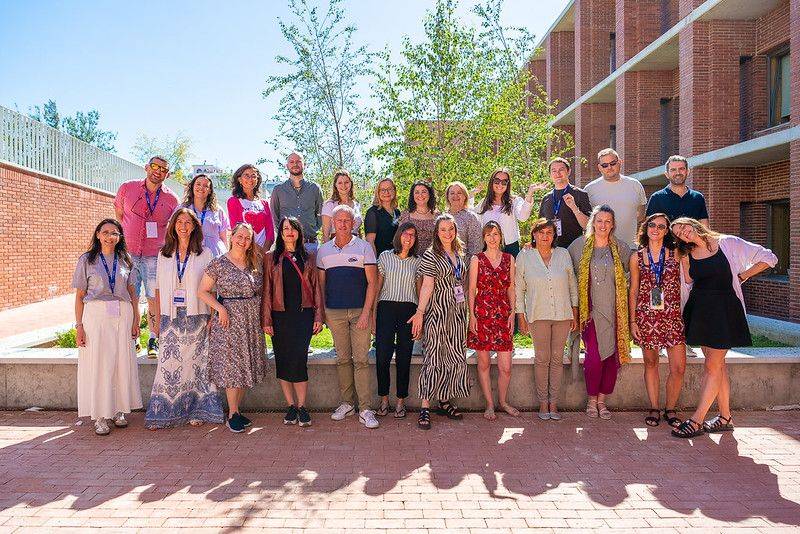
Organisation: Iscte – University Institute of Lisbon (P LISBOA07)
BIP ID: 2022-1-PT01-KA131-HED-000056127-2
Short Description: The Erasmus+ Programme brought new challenges and has created new dynamics in the International Relations Office and the Academic departments/faculties of higher education institutions.
Through practical workshops, a group of diverse learners (academic and administrative staff), will address the topics of inclusion, diversity, intercultural competences, digital inclusion, and inclusive environment.
The full programme will be available in mid-June.
Virtual component: 8th July 2024 | On-site component: 15th to 19th July 2024
The on-site component will take place at the Iscte – University Institute of Lisbon, Av. das Forcas Armadas, 1649 – 026 Lisboa, Portugal.
The Staff Training Week will be organised as an Erasmus+ BIP and therefore, it is mandatory to participate in the virtual and the on-site components.
Application: closed
BIP Language: English
Participants: Administrative and academic staff members from Higher Education Institutions, preferably with and IIA established with Iscte.
An active participation of all participants is expected to enrich the exchange of experiences and its practices
The minimum number of participants is 15 and the maximum number of participants is 25.
Costs: Cost with travelling, and meals shall be supported by the participants. Those interested should contact the international relations office of their home university to find out if Erasmus+ grants for staff mobility for training are available.
The BIP has no registration fees. Some cultural activities shall be organised, and cost may apply.
More information: iro@iscte-iul.pt
OBJECTIVES
SCIENTIFIC AREA
Social Work
DATES
Physical Part: 5 days - 09/10/23 to 13/10/23
ORGANISING INSTITUTION
Iscte
RESPONSIBLE
Jorge Ferreira
PARTNERS
Belgium- Hogeschool Gent (HOGENT)
Germany- Catholic University of Applied Sciences of North Rhine- Westphalia
Slovakia- Catholic University in Ruzomberok
iro@iscte-iul.pt
OBJECTIVES
Short blended intensive programme about Right to the City, exploring sub-themes like: Care for Housing, Housing and Urban Commons, Co-Housing, Housing Cooperatives, Social Role of Digital Fabrication
SCIENTIFIC AREAS
Architecture, Social Work, Sociology, Public Policy, Political Science, Law
DATES
Physical Part: 5 days 10/10/22 to 14/10/22
ORGANISING INSTITUTION
Iscte
RESPONSIBLE
Alexandra Paio
PARTNERS
Croatia- University of Zagreb
Cyprus- University of Cyprus
Greece- University of Thessaly Volos
Romania- Gheorge Asachi Technical University of Iasi
OBJECTIVES
Interest in gaining new knowledge and competence in sharing theory as well as good practices in development work and innovations of wellbeing services (social services). The focus is on sustainability and Social Interventions
SCIENTIFIC AREAS
Social Work, Sociology, Public Policy, Political Science, African Studies, Architecture, Data Science, Public Administration
DATES
Physical Part: 5 days 14/03/22 to 18/03/22
ORGANISING INSTITUTION
Iscte
RESPONSIBLE
Jorge Ferreira
PARTNERS
Finland- Laurea University of Applied Sciences (PIONEER PARTNER)
Slovakia- Catholic University in Ruzomberok
Slovakia- Matej Bel University