
ATENÇÃO: Esta página foi traduzida automaticamente pelo Google Translate. Isto pode ter consequências inesperadas no conteúdo apresentado e, portanto, não nos responsabilizamos pelo resultado dessa tradução automática.
ATTENTION: this page has been automatically translated by Google Translate. This can have unexpected consequences and, therefore, we do not take responsibility for the result of that automatic translation.
The Board of Trustees is responsible for:
Composition
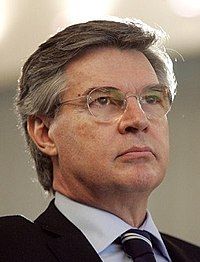
José António Pinto Ribeiro (Chair)
He graduated in Law from the University of Lisbon in 1969, with a final grade of 17 out of 20. He held teaching positions at the Higher Institute of Economics (1971–1980), the Faculty of Law of the University of Lisbon (1975–1987), the Autonomous University of Lisbon (1987–1993), Iscte (1996–1997), and the NOVA School of Law (1997–2002).
He has been a member of the Portuguese Bar Association since 1971 and founded his own law firm, J. A. Pinto Ribeiro & Associados, in 1975. He played a key role in the establishment of SIBS – Sociedade Interbancária de Serviços and the Portuguese Banking Association. From 1985 to 2008, he was a member of the Legal Committee of the European Banking Federation, which he chaired from 1995 to 1999.
He served as a non-executive board member and chair of the general assembly of several companies. In 2007 and 2008, he represented the Portuguese State as head of delegation at UNCITRAL (United Nations Commission on International Trade Law). He is the founder and Chair of the Forum Justiça e Liberdades, an association dedicated to the study, promotion, and defence of civil rights in Portugal.
He served as Minister of Culture in the 17th Constitutional Government of Portugal (2008–2009), during which he launched several initiatives, including the INOV-ART internship programme.
He has been a member of the High Council of the Public Prosecution Service since 2010, having first been elected by the Portuguese Parliament on 10 December 2009 and re-elected on 16 February 2016.
He has been awarded the Order of Liberty, Grand Officer (Portugal), the Grand Cross of Merit with Star and Sash (Federal Republic of Germany), and the Grand Cross of Merit with Star and Sash (Poland). On 10 December 2013, he was awarded the Medal of Honour of the Portuguese Bar Association.
As a student, he received the Gulbenkian Prize for Best Student in Legal and Economic Sciences.
Ana Benavente
She has held a PhD in Educational Sciences from the University of Geneva since 1985. She is a researcher at CeiEF – Centre for Studies and Intervention in Education and Training, coordinator of the Observatory of Education and Training Policies, and lecturer in the Master's and PhD programmes in Education at Lusófona University of Humanities and Technologies.
She was a teaching assistant at the University of Geneva and a researcher in Education at the Institute of Social Sciences of the University of Lisbon. She served as Secretary of State for Education (1995–2001) in the 13th and 14th Constitutional Governments and as a Member of Parliament (1995–2005), where she was responsible for the Parliamentary Committee on Education, Culture and Science.
She has extensive international involvement. After several years dedicated to teacher training at the Faculty of Sciences of the University of Lisbon, she retired in 2009. She led action research projects and several studies on school exclusion and coordinated the first National Literacy Study.
She served as Vice-President (elected by the European region) of the General Council of the International Bureau of Education (IBE), UNESCO, Geneva (2001–2005). She was a member of the OECD CERI Committee (Centre for Educational Research and Innovation) from 1996 to 2002.
As a government representative, she worked with international agencies across Europe, Africa, the Americas, Australia, and Japan.
She has an extensive body of published work and has participated in hundreds of national and international colloquia, conferences, and congresses. She continues her work as an international consultant.
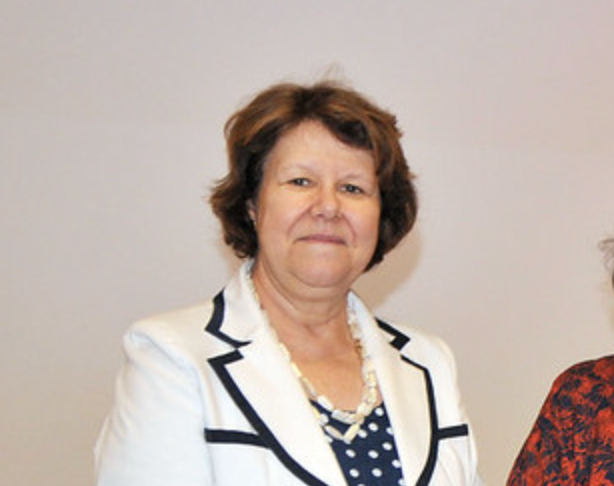
Ana Paula Laborinho
She holds a PhD in Portuguese Literature and is a professor at the School of Arts and Humanities of the University of Lisbon. Her main areas of expertise are travel narratives, particularly those related to the Age of Expansion, and Portuguese Orientalism.
She has taught undergraduate and postgraduate programmes in Portuguese Literature, French Literature, Spanish-American Literature, Travel Narratives, Language Policies, and Cultural Policies. She created and coordinated the Portuguese Orientalism research line at the Centre for Comparative Studies of the School of Arts and Humanities of the University of Lisbon.
She spent approximately 14 years in Macau, where she served as Director of the Cultural Institute of Macau, with responsibilities in research, and as a lecturer at the University of Macau. Between 1996 and 2002, she was President of the Portuguese Oriental Institute, the institution responsible for promoting and disseminating the Portuguese language and culture in East Asia.
Between 2010 and 2012, she served as President of the Camões Institute and, from 2012 to 2017, as President of Camões – Institute for Cooperation and Language, with responsibilities for the international promotion of Portuguese language and culture, and for the development of international cooperation policy.
Since 1 November 2017, she has been Director of the Portuguese representation of the Organisation of Ibero-American States for Education, Science and Culture (OEI), a multilateral organisation for cooperation in these fields that brings together 23 Ibero-American countries.
António Saraiva
He was first elected President of CIP – Portuguese Business Confederation in 2011 and re-elected in 2014. He was a member of the Board of CIP – Portuguese Industry Confederation from 2004 to 2006, Vice-President from 2007 to 2009, and President between 2010 and 2011.
He began his professional career at 17 at Lisnave, where he later became President of the Workers' Committee. He also served as Director and board member of Metalúrgica Luso-Italiana.
From 2001 to 2003, he was a member of the Board of the Association of Metallurgical and Metalworking Industries of Portugal, serving as Vice-President from 2004 to 2006 and President from 2007 to 2009.
He attended the Instituto Superior Técnico.
Maria Teresa Carmo Soares Calçada
She holds a degree in Philosophy from the School of Arts and Humanities of the University of Lisbon. She taught Philosophy in secondary education between 1973 and 1981.
Between 1982 and 2007, she worked as a specialist at the Portuguese Book Institute/Ministry of Culture. In 1986, she joined the working group responsible for defining the principles of the national public reading policy, which led to the creation of the Municipal Libraries Network.
She served as Vice-President of the National Library and Book Institute until 1996. That same year, she participated in the interministerial working group that laid the foundations, established guiding principles, and outlined the lines of action for the School Libraries Network Programme.
From 1997 to 2014, she coordinated the School Libraries Network Office (RBE), leading the first national public policy programme for school libraries. The programme aimed to establish libraries in schools at all levels of education, conceived as multimedia centres providing users with the resources necessary for reading, access to and use of information in multiple formats, while playing a central role in the development of reading habits, multiple literacies, personal and social development, knowledge, and citizenship.
She also served as Deputy Commissioner of the National Reading Plan (PNL) from 2005 to 2013.
Between 2015 and 2017, she coordinated the research group responsible for the MILD Project (Manual de Instruções para a Literacia Digital – Manual for Digital Literacy), which promoted digital literacy among young people and was sponsored by the Calouste Gulbenkian Foundation.
She is the author of books and articles published in specialist journals. She regularly participates in national and international meetings and conferences, presenting work in the fields of reading and libraries.
She currently serves as Commissioner of the National Reading Plan 2027. She is also a board member of the Reading Volunteers Association, serving as chair of its General Assembly Board.
On 10 June 2006, she was awarded the Commander of the Order of Public Instruction.