
ATENÇÃO: Esta página foi traduzida automaticamente pelo Google Translate. Isto pode ter consequências inesperadas no conteúdo apresentado e, portanto, não nos responsabilizamos pelo resultado dessa tradução automática.
ATTENTION: this page has been automatically translated by Google Translate. This can have unexpected consequences and, therefore, we do not take responsibility for the result of that automatic translation.
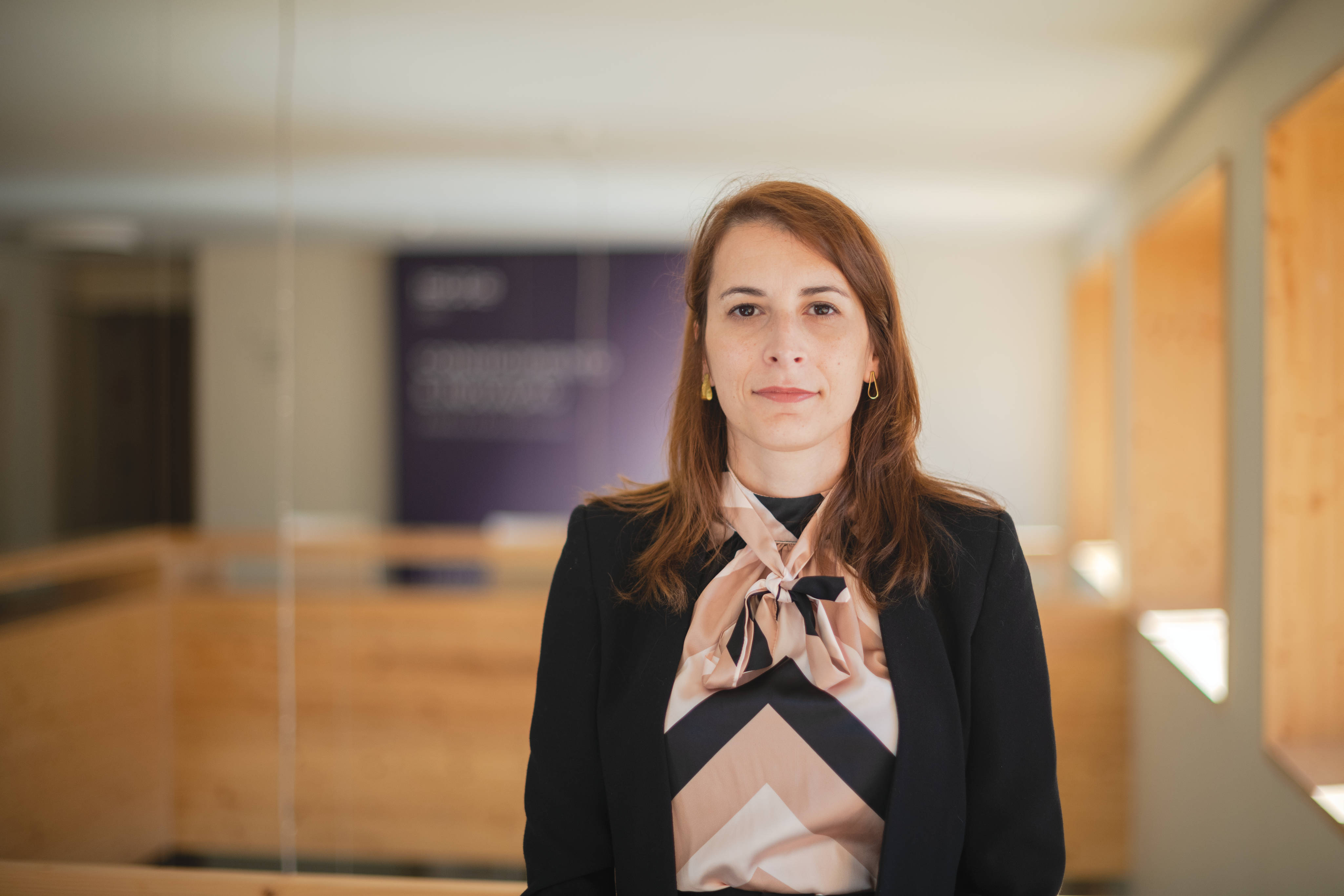
Professor Iscte Business School
Researcher BRU-Iscte
"Perceptions of exploitation in working relationships: impact on employees' health and behavior" is the focus of the *EWRI* project (*Exploitative working relationships: Impact on employees health and behaviors*), which you lead. What is the main objective of this research?
The first idea was to look at our organizations, at the nature of work today and verify that exploitation is still a reality, it has just changed form. And it doesn't only happen in underdeveloped or developing countries, it happens here and, often, right beside us and in jobs that were and are seen as prestigious. However, there is this dimension of organizations making use of employees' work and not giving much in return.
In summary, this project proposes to rethink organizations in Portugal and verify that exploitation doesn't only happen elsewhere. We want to know if workers' perceptions of exploitation have negative consequences for their health and subsequent behaviors and if there are individual-level factors that mitigate or amplify the effects of the perception of exploitation.
Every day we see cultures of overwork, precisely in developed countries. There is a lot of pressure to work too many hours (sometimes 80 hours/week), human resources are constantly being controlled and more and more is demanded of them.
How is the team constituted and what is your starting point?
The project includes researchers from Portugal, the United Kingdom and the United States. We have an international team and the possibility to see if the proposed models are similar between countries, if people's perception when they are exploited is identical.
Part of the team, besides me, is Professor Jacqueline Coyle-Shapiro, from the *London School of Economics and Political Sciences*, who is part of the *International Scientific Advisory Board* of *BRU-Iscte*, with whom I have worked since my doctorate.
Professor Teresa de Oliveira, in Great Britain, does research that uses technology to measure sleep quality, and analyzes to what extent working conditions affect sleep patterns. There is also another colleague from the United States, Professor Lynn Shore, who does research in the area of employee-organization relationships. Subsequently, we complete this multidisciplinary team with a postdoctoral researcher and a research assistant.
This project seeks a "lens change": we stop perceiving working relationships as something good, where something bad happens from time to time, and start seeing that working relationships can have a negative nature. Instead of analyzing exploited groups, we see how each person evaluates the quality of their daily work and their relationships with the boss and colleagues and, from there, constructs a perception of exploitation. This happens in any profession, from doctors to cleaning ladies.
The perception of exploitation is something that the person themselves thinks and feels, and we are not only talking about specific groups like immigrants, whose theme is already the subject of research. The prevalence of these perceptions in other professions/occupations is not known. Initial studies show that medical interns and workers in the construction area have these perceptions: they feel that the organizations where they work are taking advantage, without consequent appreciation – we want to understand more about this.
More than comparing these perceptions of exploitation, we want to verify if, in various developed countries, in different geographical areas and with different economic performances, the perception of exploitation is prevalent and what its impact is.
Is the question of exploitation directly related to the perception of the value of compensation, but does it go beyond this aspect?
Yes. We already have results from two qualitative studies, from interviews in the health sector. We got a diversified sample of doctors, technicians, operational staff. They clearly identify a structural part of exploitation. They say, for example, that "the time bank doesn't work well", "I am not adequately compensated", and this structural part of the perception of exploitation, in the health area, is linked to the conditions of organizational inefficiency. They also point out the fact that they don't have the necessary equipment and materials.
Mobilizing the organizational structure, treating people well and doing it as best as possible thus becomes a consequence of the employees' own commitment. In the interviews we capture this dimension that employees end up accepting – recognizing that they cannot resolve it – however much they feel indignant, sad and involved by negative emotions.
Is there also a relational dimension?
Yes. Many interviewees report that the issue of loyalty and vocation ends up being a weapon for exploitation and that it is middle management that makes these appeals, reinforcing the structural issue. They are the so-called "facilitators". And this has already been validated this year in the United Kingdom and the United States, in very recent experiments that concluded that the most loyal workers are the easiest targets to be exploited. In the interviews, health professionals say: "we are just a number". This is sad, because it's an essential group for the functioning of any society. In the survey of health workers in private groups the result was slightly better.
The interviews are very rich and people use "they" a lot to talk about supervisors or middle management as representatives of the organization. The project also wanted to understand how these health workers, who during Covid-19 were heroes because they had love for the profession, are the "ideal target" for their organizations.
What was the focus of the second study?
We tried to understand if this happened in other sectors, with a more diversified sample. The interviewees talk about the organization as if they were talking about another person's characteristics and clearly say: "takes advantage of us", "they don't care about our needs", "they are not concerned with our well-being", that is, there is the perception of feeling they are being exploited by someone.
In the follow-up, we took advantage of the responses to the first interviews to deepen the perceptions of exploitation. In day-to-day life, there is no awareness that this has a value of exploitation, but later, most assumed that the scenarios corresponded to an attempt by the organization to take advantage without giving anything in return.
In the second part of the research, of a quantitative nature, we will evaluate the intensity levels of exploitation, as there are various structural and relational aspects in this context. It will be more diversified and involves teachers, IT technicians, engineers – there are about 30 people from different areas.
What methodologies were used to carry out the study?
We used a mixed methods approach. We planned interviews, experiments and surveys to investigate how exploitation is related to workers' health and behaviors. We will measure health outcomes, using smartwatch technology. In a second phase of the research, we manipulated the data and constructed some results; we created a questionnaire, which we asked people to respond to in phases.
We thus identified levels of exploitation: absence of exploitation, a medium level and a high level. We found differences between the absence and the high level of exploitation, but not always between the medium and high level; that is, people, when they feel exploited, immediately identify a maximum level.
We are looking for a threshold that answers us where the limit is, what is the tolerance for a relationship of this nature. We tried to manipulate intensity and frequency, but between medium and high there is not much difference. In the perception of exploitation, the person's cognitive resources are affected and also their emotional part.
What is the role of smartwatches within the scope of this project?
That is a more complex part of the project, because it requires authorizations and consent from participants who have to put on the watch that will record sleep quality, stress levels, physical exercise, among other factors.
We are very interested in sleep quality, a subject that fuels conferences, like the sleep of shift workers, etc. Our idea is to understand if people report that they are exploited at work and how this affects their sleep and health. Participants will wear *smartwatches* for at least 10 days, so we have a reference and can observe a pattern. With these devices we want to see if the physical part is affected and in what way it is.
The results of this research on the reality of specialized workers in organizations don't seem very encouraging. Is it possible that the study will produce recommendations for public policies?
In 2025, we would like to prepare some dissemination seminars with project results. The idea is to bring together people from organizations in the areas where we were able to reach and show the results. We hope there can be impact, that people become alert and decide to act. There is also the creation of a website, in Portuguese and English, to disseminate the results. I would just like to add that to study exploitation in organizations we naturally encounter resistance. It is a negative and very sensitive topic. We do not intend to know if organizations exploit people, but if people feel exploited in organizations.
«We believe that our results will influence the way organizations, managers and workers view the working relationship and its broader impact, namely in terms of the prevalence of perceptions of exploitative working relationships, their impact on individual and collective health and the tools that can be used to minimize (and in some circumstances prevent) this negative impact.
It may have impact on organizational policies and strategies in the pursuit of a dignified and healthy workplace and potential to stimulate debates and more research on what organizations do when facing economic constraints. Finally, it aims to establish paths to avoid worker exploitation.
This research has unprecedented and innovative characteristics in the panorama of human resources management and strategy.»