

ATENÇÃO: Esta página foi traduzida automaticamente pelo Google Translate. Isto pode ter consequências inesperadas no conteúdo apresentado e, portanto, não nos responsabilizamos pelo resultado dessa tradução automática.
ATTENTION: this page has been automatically translated by Google Translate. This can have unexpected consequences and, therefore, we do not take responsibility for the result of that automatic translation.
Citizen involvement is one of the cornerstones of Iscte-Health. It is recognised that citizens are agents in promoting their own health, within the broader social structures and policies that facilitate this change. Health literacy plays a key role, fostering empowerment and critical thinking.
Iscte-Health's role is therefore twofold. By helping to promote citizens' involvement in their own health, that of their families and their community, it is simultaneously helping to increase their health literacy – a fundamental prerequisite for effectively achieving improvements in individual and community health, through health promotion and disease prevention, but also through the ability to better manage public health situations.
Health communication should be seen as a valuable tool for promoting public health, as it can contribute to improvements in prevention, motivation for behavioural change and adherence to treatment – something recognised by health professionals themselves, who have increasingly come to realise the importance and critical role that communication plays in the health sector.
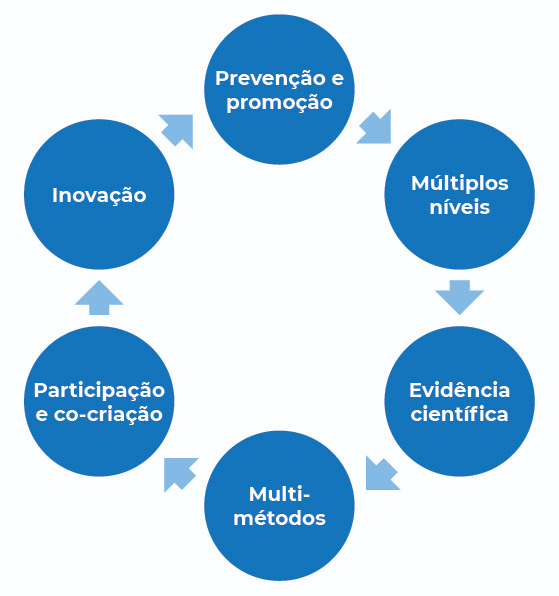
From the image above:
Six fundamental principles guide Iscte Health's approach to this issue.
Examples of projects
Intervention in the field of health promotion
Action and Research in the Field of Health Literacy
Digital Skills Training and Co-creation Initiative – Patients-Up
The original idea arose from the need to provide training for citizens living with chronic conditions on the use of digital technology, at a time when 'Digital Health' and 'Digital Therapeutics' are growing increasingly prominent. It also stemmed from ISCTE-HEALTH's desire to develop courses aimed at the general public, thereby bringing to ISCTE those who are both the primary and ultimate beneficiaries of improved societal health.
We have evolved the concept into something beyond a mere course. Still, an initiative focused on empowerment, as well as on recognising the skills (expert patients) and experiences that people living with illnesses can contribute to healthcare management and to Digital Health solutions themselves. By bringing together patients and start-ups, and drawing on the idea of valuing the patient, hence the name: Patients-Up.